
Customised Stubby Holders: Australia's Favourite Promotional Product
Discover why customised stubby holders are perfect for BBQs, corporate events, and trade shows across Australia.

Written by
Emmett Davis
Drinkware
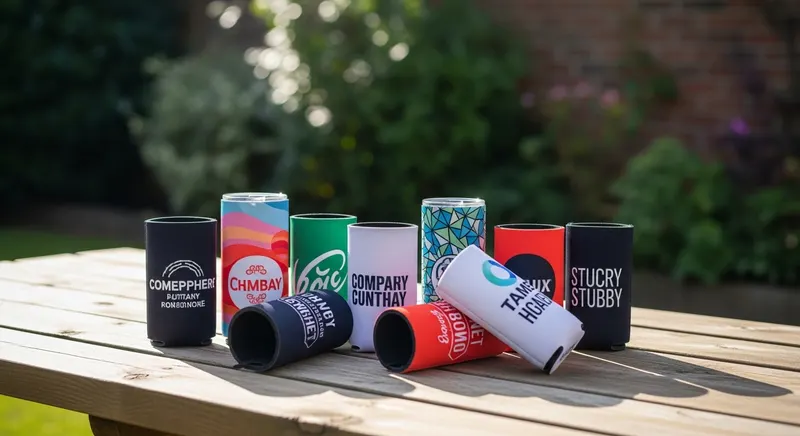
Few promotional products capture the Australian spirit quite like the humble stubby holder. Whether it’s a summer BBQ, a school fete, a corporate end-of-year function, or a trade show on the Gold Coast, customised stubby holders have earned their place as one of the most beloved and effective branded merchandise items in the country. They’re affordable, universally useful, and — when done right — they become keepsakes that people actually hold onto. If you’re exploring customised stubby holders for your next event, fundraiser, or brand awareness campaign, this guide will walk you through everything you need to know before placing your order.
Why Customised Stubby Holders Are a Staple of Australian Promotional Merchandise
Australia has a unique relationship with the stubby holder. It’s not just drinkware — it’s a cultural icon. From Perth barbecues to Darwin outdoor events, Queenslanders keeping their tinnies cold at the cricket, and Sydney corporate beach days, the stubby holder shows up wherever Australians gather to enjoy themselves. That cultural familiarity is exactly what makes it such a powerful promotional product.
Unlike a branded pen that might sit in a drawer, or a tote bag that only comes out occasionally, a stubby holder gets used repeatedly in social, visible settings. Every time someone reaches for their drink, your logo or message is front and centre — and everyone around them sees it too. That’s passive, ongoing brand exposure with zero additional spend after the initial order.
From a cost-per-impression standpoint, customised stubby holders are hard to beat. Bulk orders can bring the unit cost down significantly, and when you factor in how long a quality stubby holder lasts and how frequently it gets used, the return on investment is exceptional. For businesses, schools, and community organisations working with modest promotional budgets, this is an important consideration.
It’s also worth noting the sheer versatility of the product. Stubby holders suit:
- Corporate events and trade shows — branded giveaways that attendees will actually use
- Sporting clubs — club-coloured holders for match days and fundraisers
- Schools and P&C associations — fundraising merchandise and fete giveaways
- Charities and not-for-profits — low-cost awareness items for events and campaigns
- Hospitality and tourism businesses — on-brand merchandise for guests and retail
- Wedding and birthday merchandise — personalised keepsakes for milestone events
Understanding the Different Types of Stubby Holders
Before you start designing your artwork, it’s worth understanding that “stubby holder” is actually an umbrella term covering several different product formats. Choosing the right style for your needs can make a real difference to the final outcome.
Foam Stubby Holders
The classic foam stubby holder is the most affordable and widely ordered option. Made from polyurethane foam, these are lightweight, flexible, and excellent at insulating both cans and bottles. They’re a go-to for high-volume orders where budget is a key consideration — a Brisbane sporting club ordering 500 holders for their annual fundraiser, for example, would likely find foam holders offer the best cost-to-quality ratio.
Foam holders are typically decorated using sublimation printing, which allows full-colour, all-over designs that wrap around the entire surface. This is ideal for vibrant, complex artwork or photographic imagery. If your brand uses bright, distinctive colours, sublimation on foam is a fantastic option.
Neoprene Stubby Holders
Neoprene stubby holders have grown in popularity thanks to their premium feel and superior insulation properties. Neoprene is the same material used in wetsuits — it’s durable, slightly stretchy, and provides excellent cold retention. These holders tend to command a slightly higher price point, but they’re well suited to premium brand positioning or when you want recipients to perceive real value.
Like foam holders, neoprene is typically sublimation printed, allowing for stunning full-colour designs. For a Melbourne corporate event where the gift needs to feel considered and high-quality, neoprene stubby holders can be an excellent choice.
Can Cooler Bottles and Collapsible Styles
Beyond the traditional cylindrical format, there are also collapsible stubby holders (great for easy storage and travel), bottle stubby holders designed for long-neck beer bottles, and even hard-shell aluminium can coolers for a more rigid, premium option. Understanding your end-user and the context in which the product will be used helps narrow down the right format quickly.
For a deeper look at matching drinkware products to different audience needs, check out our guide to choosing the right branded drinkware for your organisation.
Decoration Methods for Customised Stubby Holders
Getting the decoration right is just as important as choosing the right holder. The good news is that modern printing technology gives you a lot of creative flexibility.
Sublimation Printing
As mentioned above, sublimation is the most common decoration method for both foam and neoprene stubby holders. The process involves printing your design onto transfer paper using special inks, then applying heat to transfer the design permanently into the material. The result is a vibrant, full-colour print that won’t crack, peel, or fade — even after repeated washing.
Sublimation is ideal when your design features:
- Multiple colours or gradients
- Photographic elements
- All-over print coverage
- Fine detail or complex graphics
One important note: sublimation works best on white or light-coloured bases, because the ink is semi-transparent. If your brand primarily uses dark colours, discuss your options with your supplier — they may recommend a white background panel for the logo area.
Screen Printing
Screen printing can be applied to some stubby holder formats, particularly when the design is simple and uses a limited number of spot colours. It’s less commonly used for stubby holders compared to apparel, but it can be cost-effective for very large print runs with straightforward artwork.
For a broader overview of how these methods compare across different products, our comparison of screen printing vs sublimation for promotional products is a helpful starting point.
Pad Printing
Pad printing is occasionally used on hard-surface or rigid can cooler products where sublimation isn’t suitable. It’s best for simple, one or two-colour logos and text rather than complex designs.
Artwork Requirements and Design Tips
One of the most common pain points when ordering customised stubby holders is preparing the artwork correctly. Here’s what you need to know before you brief your designer — or before you send in files yourself.
File formats: Most suppliers require vector artwork (AI, EPS, or PDF with fonts outlined). High-resolution raster files (300dpi JPEG or PNG) may be acceptable for sublimation jobs, but vector is always preferred for sharp, clean results.
Colour profiles: For sublimation printing, artwork should be set up in CMYK rather than RGB, as the printing process uses CMYK inks. If you’re matching specific brand colours, provide Pantone (PMS) references and ask your supplier how closely they can match them in sublimation.
Bleed and safe zones: For all-over designs, make sure your artwork includes bleed (usually 3mm) and that any important elements like logos and text sit within a safe zone away from the edges and seams.
Template files: Always ask your supplier for a product template before finalising your design. Templates show the exact dimensions, seam placement, and safe areas specific to the product you’ve ordered. A Canberra government department that skips the template step, for example, might end up with their logo awkwardly placed across a seam — a frustrating and costly mistake to rectify.
If you’re working with a designer new to promotional products, share our artwork setup guide for promotional product printing with them to get your files print-ready from the start.
Minimum Order Quantities, Pricing, and Turnaround Times
Understanding the practical side of ordering is essential for planning your project effectively.
Minimum Order Quantities (MOQs)
Most suppliers have a minimum order quantity for customised stubby holders, which typically starts at 50 units for foam styles and may be slightly higher for neoprene or premium formats. Some suppliers offer lower MOQs — even as low as 25 — but unit pricing will be higher at smaller quantities. If you’re ordering for a large Adelaide school fundraiser or a multi-day Sydney conference, ordering in bulk is almost always the smarter financial decision.
Pricing Tiers
Stubby holder pricing follows a standard bulk pricing structure — the more you order, the lower the unit cost. As a general guide:
- 50–100 units: Higher per-unit cost, good for small events or pilots
- 200–500 units: Mid-range pricing, suits most corporate and school orders
- 500+ units: Significant cost reductions, best for large events or annual merchandise runs
Setup fees may apply, particularly for screen printing setups. Sublimation jobs often have lower setup costs since they’re digitally driven, but always confirm with your supplier upfront.
Turnaround Times
Standard production time for customised stubby holders is generally 7–14 business days after artwork approval. Rush turnaround options may be available (often 3–5 business days), but these attract a premium and are subject to production capacity. If you’re ordering for a specific event — say, a Hobart charity golf day or a Melbourne Cup lunch — always work backwards from your event date and build in buffer time for proof approvals and shipping.
For more guidance on planning your promotional merchandise order timeline, read our post on how to avoid last-minute promotional product stress.
Tips for Getting the Most Out of Your Customised Stubby Holder Order
Making the most of your investment goes beyond just placing the order. Here are some practical tips from experienced promotional merchandise buyers:
- Order samples first if you’re placing a large order or working with a new supplier. A physical sample lets you assess print quality, material feel, and colour accuracy before committing to 500+ units.
- Consider your distribution context — will these be handed out at a single event, included in a hamper, used as retail merchandise, or mailed to clients? The answer may influence whether you choose foam (lightweight, lower postage cost) or neoprene (premium unboxing experience).
- Match the holder to the occasion — a fun, colourful design suits a school fundraiser or community event, while a clean, minimal logo on a quality neoprene holder suits a corporate gift or client thank-you package.
- Think about longevity — bright, well-printed stubby holders on quality neoprene or foam will last years. Poor-quality prints that fade quickly reflect poorly on your brand, so don’t sacrifice quality for the cheapest possible unit cost.
- Bundle with complementary products — customised stubby holders pair beautifully with branded bottle openers, picnic sets, or cooler bags for a cohesive gift or event pack.
For inspiration on building a complete branded event merchandise kit, see our guide to putting together a promotional merchandise pack for corporate events.
You might also find these related resources helpful as you plan your order:
- The complete guide to branded keep cups and coffee cups for Australian businesses
- How to choose between different branded bag styles for your next event
- Understanding setup fees and hidden costs in promotional product orders
- Eco-friendly promotional products for sustainability-focused organisations
- How to brief a promotional products supplier: a step-by-step guide
Conclusion: Making Customised Stubby Holders Work for Your Brand
Customised stubby holders are genuinely one of Australia’s most effective promotional products — and it’s not hard to see why. They’re practical, culturally relevant, highly visible in social settings, and available at price points that suit everything from small community fundraisers to large-scale corporate merchandise programs. When you take the time to choose the right style, prepare quality artwork, and work with a reliable supplier, the end result is a product that genuinely represents your brand well and gets used again and again.
Here are the key takeaways to keep in mind as you plan your order:
- Choose the right format for your audience — foam for budget-conscious bulk orders, neoprene for premium positioning
- Sublimation printing is the gold standard for customised stubby holders, enabling vibrant, durable, full-colour designs
- Prepare artwork properly using vector files, CMYK colour profiles, and supplier-provided templates
- Plan your timeline carefully — factor in proof approvals, production, and shipping, especially when ordering for a specific event date
- Order in bulk where possible to take advantage of tiered pricing and keep your per-unit cost down
Whether you’re a Brisbane marketing manager gearing up for trade show season, a Melbourne school P&C planning your annual fete, or a Perth sporting club looking for a practical fundraising product, customised stubby holders deserve serious consideration in your promotional merchandise mix.